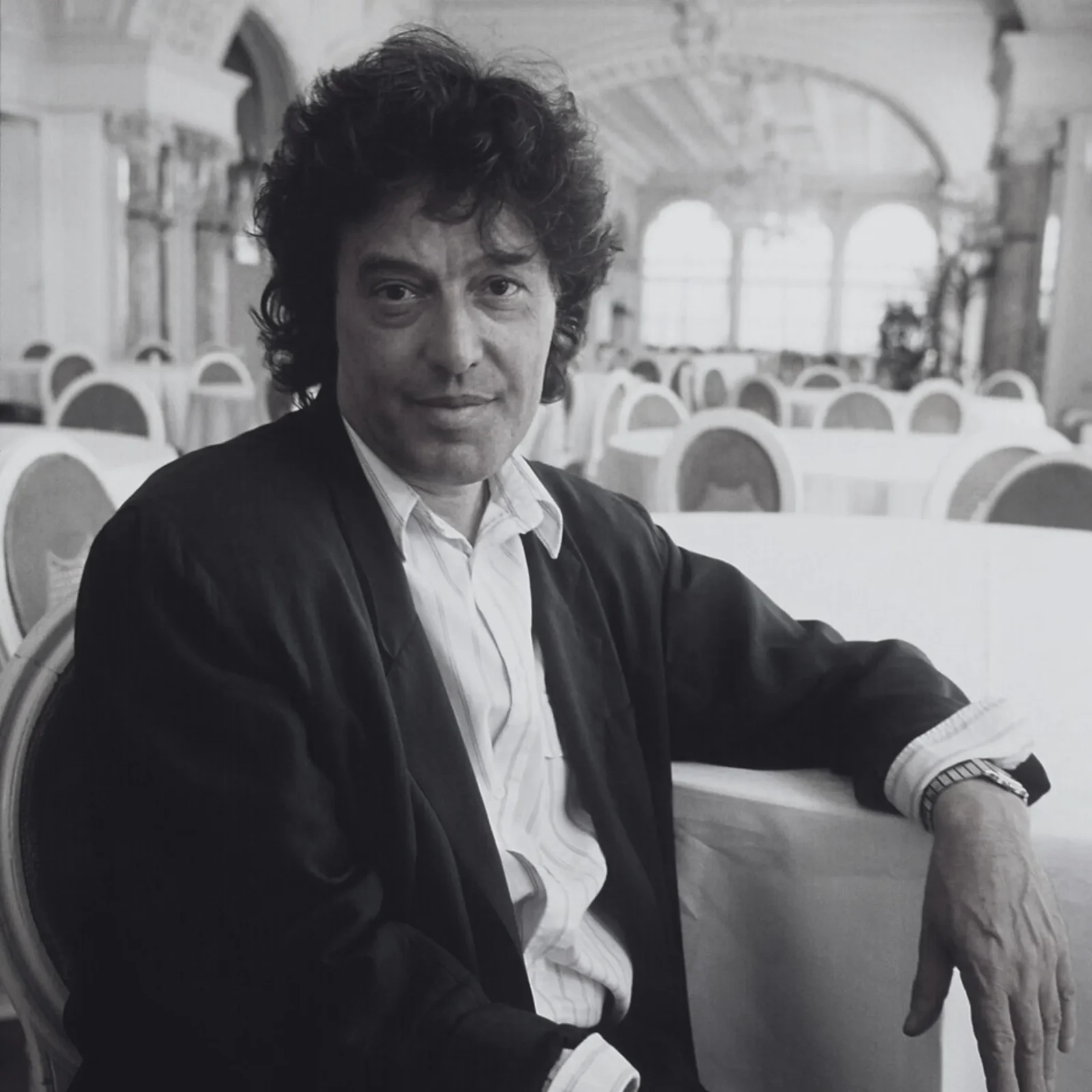

Tom Stoppard, the Czech-born British playwright whose dazzling intellect, philosophical wit, and emotional precision reshaped modern drama, passed away yesterday at age 88. His death marks the loss of one of theatre’s most inventive and humane voices, a writer who expanded what language, logic, and theatricality could hold.
Early Life & Beginnings
Born Tomáš Sträussler on July 3, 1937, in Zlín (now Czech Republic), Stoppard’s early childhood was shaped by displacement: fleeing Nazi occupation, losing his father during the war, and eventually settling in England, where he later adopted the name Tom Stoppard.
Before becoming a playwright, he worked as a journalist in Bristol, developing the incisive curiosity, structural economy, and linguistic agility that would come to define his dramatic voice.
His breakthrough came in 1966 with Rosencrantz and Guildenstern Are Dead, the absurdist, existential inversion of Hamlet that launched him onto the global stage and announced a writer deeply attuned to the comic rhythms of uncertainty, chance, and human longing.

The Theatre of Questions
Where others sought clarity, Stoppard sought the beauty of the question.
His plays fused mathematics, physics, history, music, and philosophy into theatrical events that invited audiences to think, laugh, and feel all at once.
His signature works, including Arcadia, The Real Thing, The Invention of Love, Travesties, and Rock ’n’ Roll, balanced intellectual play with piercing emotional truth.
He often described his process as “interrogating the world with delight,” a sensibility evident in his intricate structures, rapid-fire dialogue, and deep curiosity about the collisions between art, science, and the human heart.
Beyond his stage work, Stoppard was a prolific screenwriter, contributing to films such as Shakespeare in Love (Academy Award for Best Original Screenplay), Brazil, and Empire of the Sun, where his structural finesse and lyricism found new mediums.

Screenplay by Terry Gilliam, Tom Stoppard, Charles McKeown, source: Universal Pictures
Expanding Horizons
Across six decades, Stoppard remained a stylistic alchemist, an artist who treated language as both instrument and inquiry. He reinvented the historical epic with The Coast of Utopia, reimagined biography and memory in Leopoldstadt, and continually returned to themes of identity, exile, and belonging.
His numerous honors include the Laurence Olivier Award, Tony Awards, the PEN Pinter Prize, and a Knighthood in 1997 for services to drama. Yet Stoppard’s influence extends far beyond awards. Generations of playwrights cite him as a model for blending intellectual rigor with aching humanity.
Collaborations & Impact
Stoppard’s work brought actors, directors, and designers into thrilling interpretive terrain, where a line of dialogue could turn on a philosophical hinge or a single gesture could unlock the emotional core of a complex idea.
He collaborated with artists such as Trevor Nunn, Patrick Marber, Marianne Elliott, Marc Norman, and countless others whose contributions helped shape his theatrical worlds.
His plays became staples of repertory companies from London to New York, Berlin to Buenos Aires. They challenged and nourished audiences, inviting them to inhabit the vastness of thought and the intimacy of feeling.

A Commitment to Human Rights
Less widely known but profoundly influential was Stoppard’s advocacy for dissident writers and political prisoners.
He championed Václav Havel, wrote powerfully on human rights, and used his platform to amplify voices silenced by censorship and authoritarianism.
For Stoppard, art and ethics were intertwined; stories mattered because people mattered.
A Life in Ideas, A Legacy in Humanity
Tom Stoppard’s passing closes a major chapter in the history of contemporary theatre. He leaves behind a body of work that continues to challenge, delight, and transform audiences and artists alike.
He is survived by his family and an extraordinary legacy that will echo not only on stages and bookshelves, but in classrooms, rehearsal rooms, and conversations among those who believe theatre can hold both the sweep of history and the fragile beauty of human connection.
At 88, Stoppard continued refining plays, revisiting drafts, and mentoring younger writers, a testament to his belief that art is a lifelong apprenticeship in curiosity.
Further Reading
- Tom Stoppard: A Life by Hermione Lee
- Tom Stoppard in Conversation with Dame Hermione Lee
- The Coast of Utopia (Trilogy)
- Leopoldstadt (Play and Production Resources)