

by @robertoboldini
In the autumn of 2025, Milan prepared to celebrate fifty years of Giorgio Armani’s creative genius. For the occasion, the halls of the Pinacoteca di Brera were set to welcome, displayed like true works of art, the creations of the Milanese couturier.
But on September 4, the King bid farewell to what had become his city—his Milan, and his Brera, the neighborhood he had made his own. His passing left the fashion world stunned, just days before Fashion Week. On September 28, under the arcades of the Pinacoteca di Brera, the last runway of King Giorgio took place: a symbolic farewell in one of Milan’s most emblematic spaces.
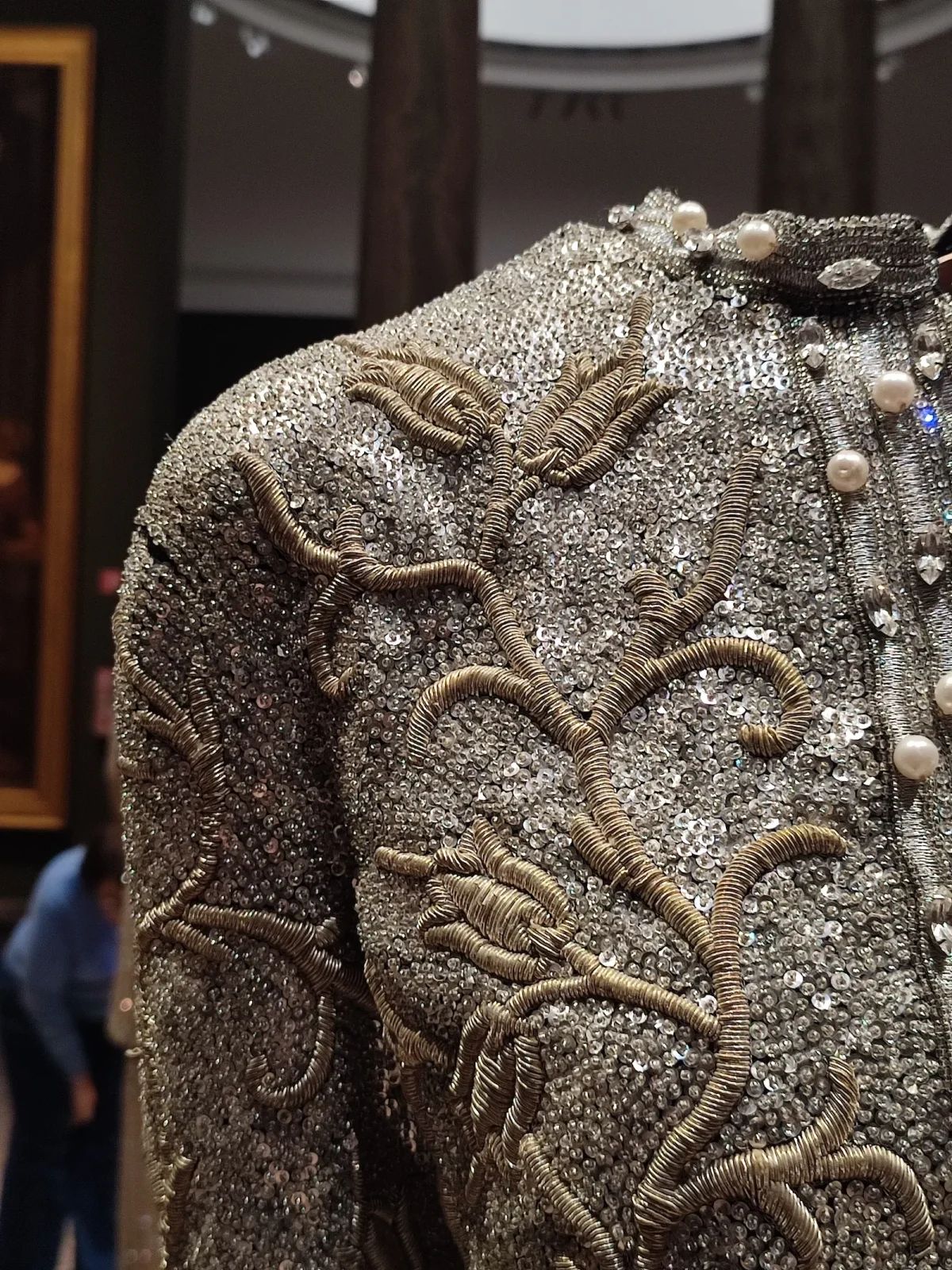
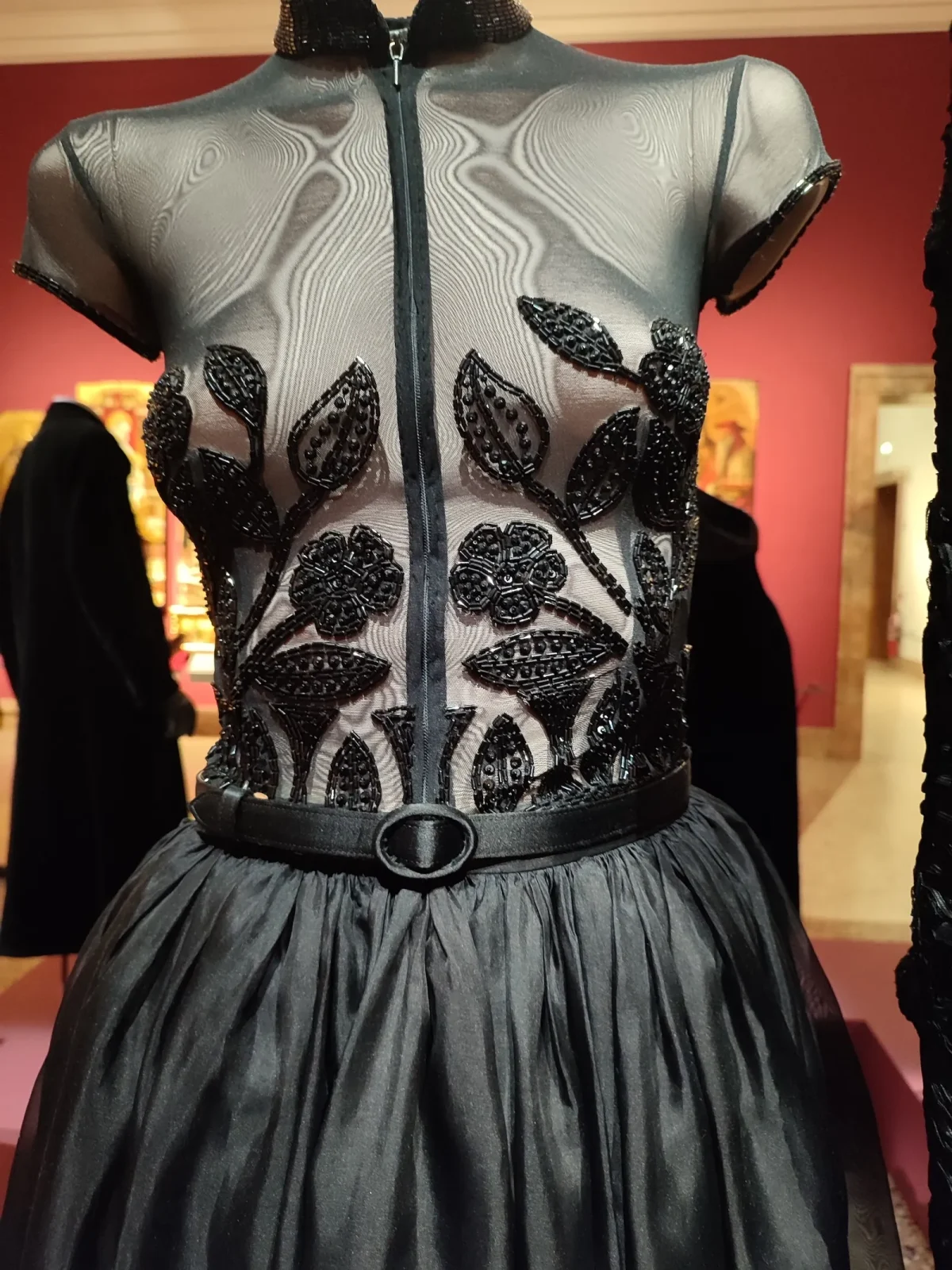
As the models walked, watched by the greats of the fashion world, the upper galleries shimmered with the treasures of the Armani Collezione. Amid the sparkle of glass bugle beads, sequins, and delicate appliqués, the precious essence of Italian craftsmanship shone through. In the precision of every stitch and in the balance between richness and restraint, one could read Armani’s mastery in transforming craftsmanship into the language of international elegance.
Fashion and Museum Spaces.
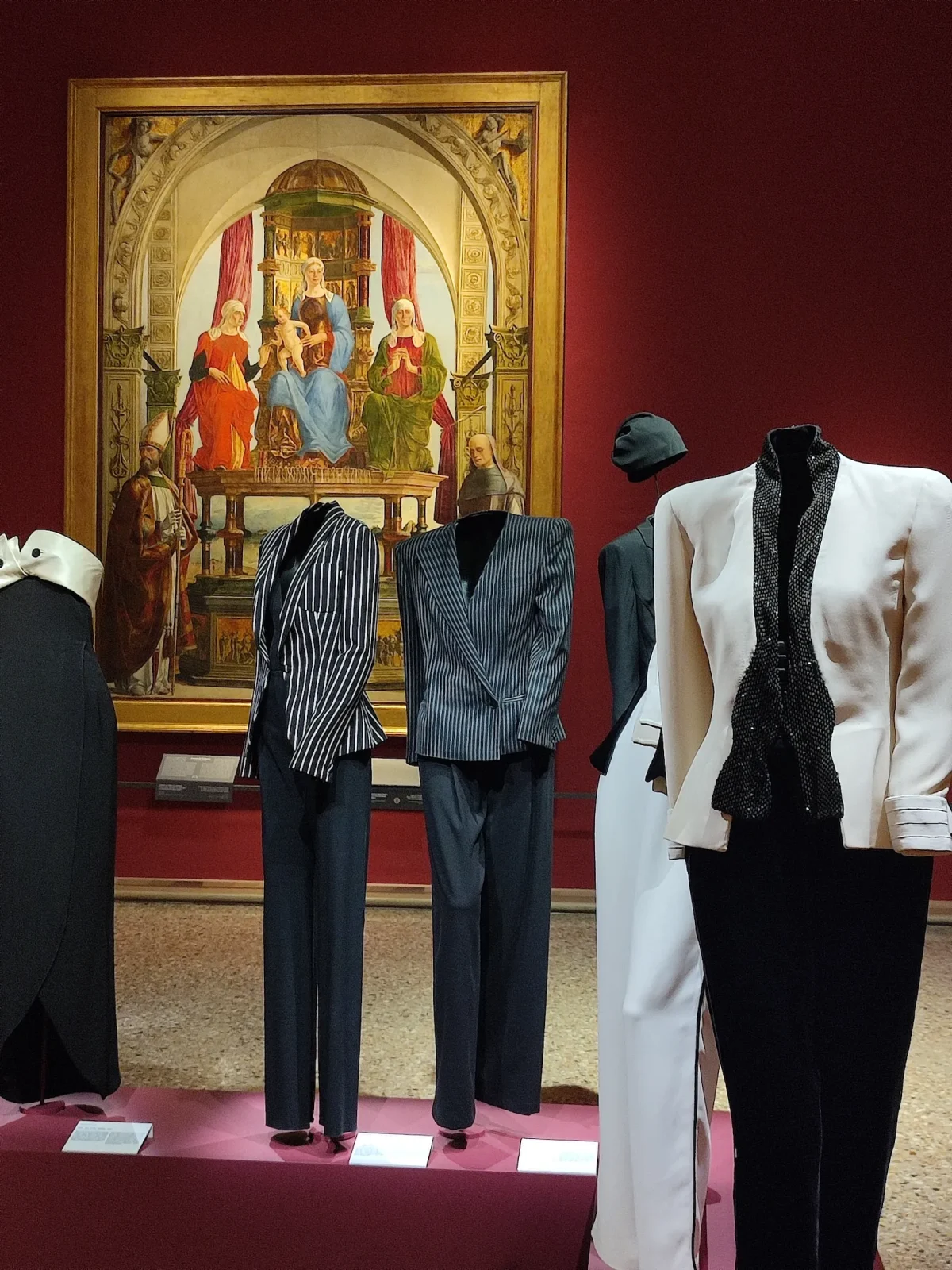
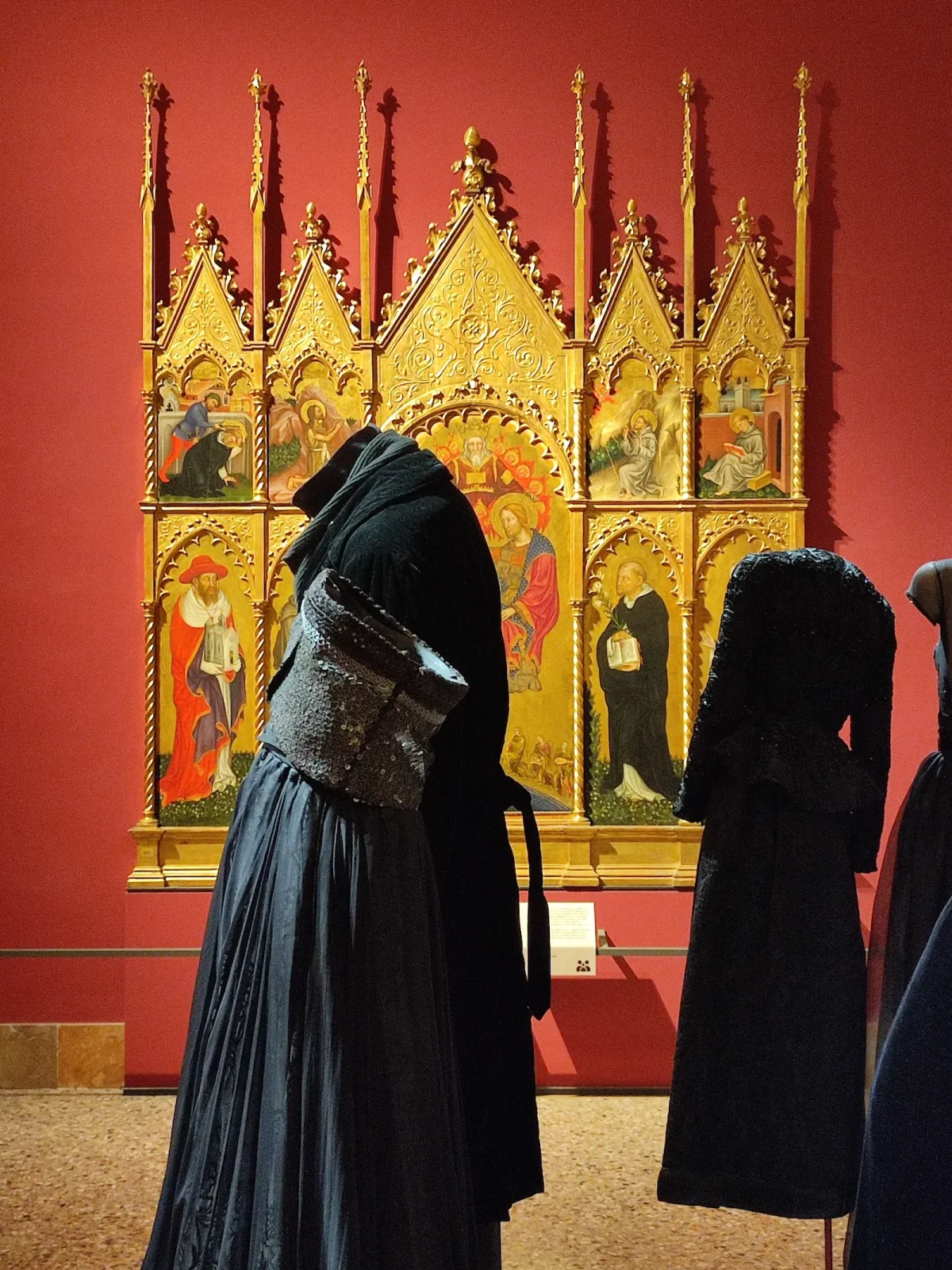
Over one hundred and twenty creations from the Armani Archive were displayed among paintings spanning from the Middle Ages to the nineteenth century in the Pinacoteca’s rooms. There were no spectacular installations or visible mannequins, only the garments themselves standing as the true protagonists.
The exhibition’s curatorial approach inevitably invites comparison with Louvre Couture, the much-hyped fashion show recently held at the Parisian museum. Yet the two could not be more different.
At the Louvre, garments were arranged by resemblance: Balenciaga’s armor-like dress beside medieval armor, or feathered gowns and camouflage textiles juxtaposed with hunting tapestries. In this pursuit of visual analogy, the clothes often struggled to hold their own beside the museum’s historical masterpieces.
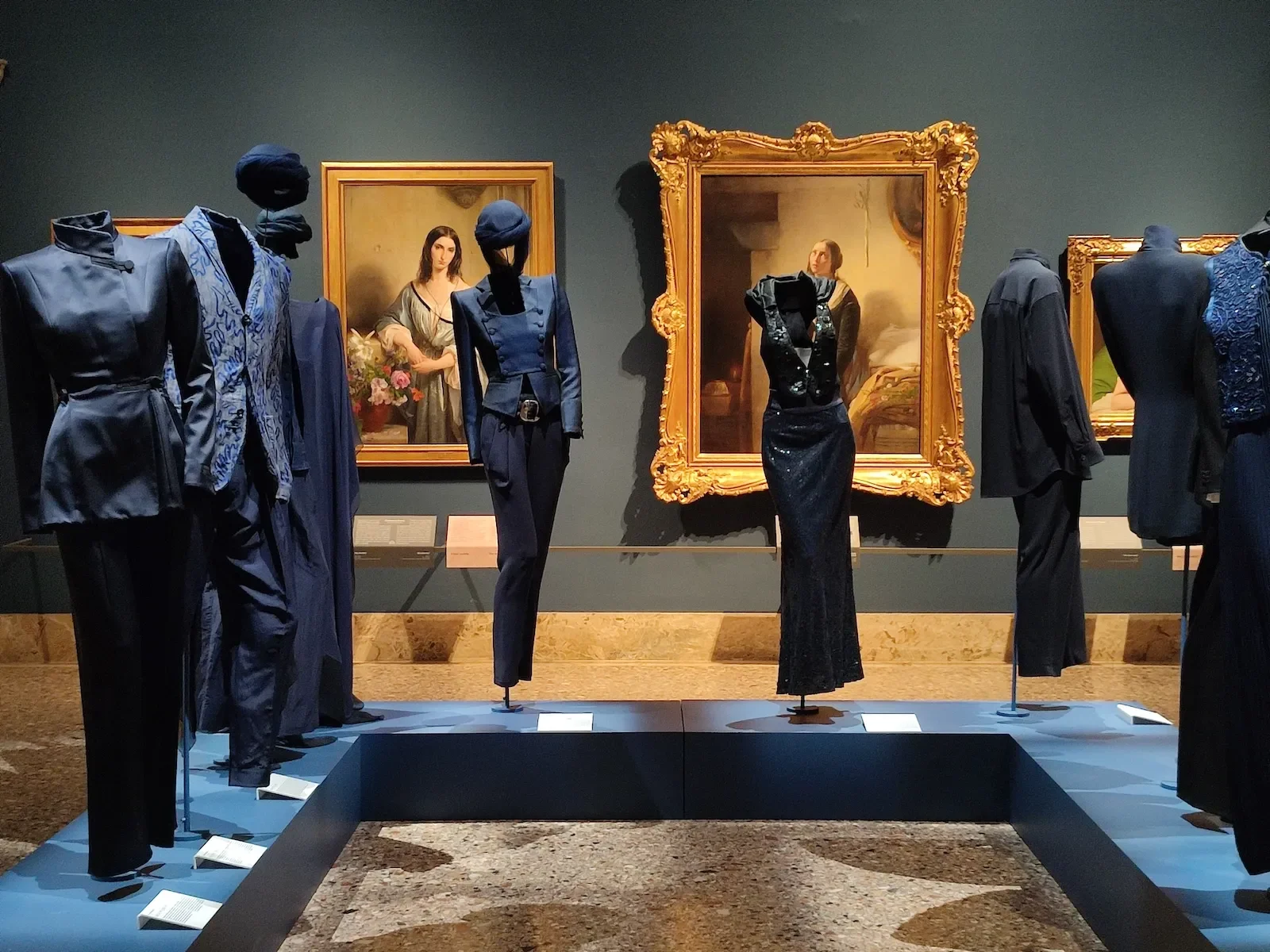
In Milan, the opposite occurs. The garments are positioned according to chromatic harmony with the surrounding rooms and paintings, allowing them to be truly enhanced. The artworks of the Pinacoteca, regardless of subject or era, become a magnificent frame that elevates the pieces. In the nineteenth-century gallery, for example, it is not so much the Hayez paintings that converse with the garments, but rather the golden frames themselves, which exalt the deep midnight-blue tones of Armani’s creations.
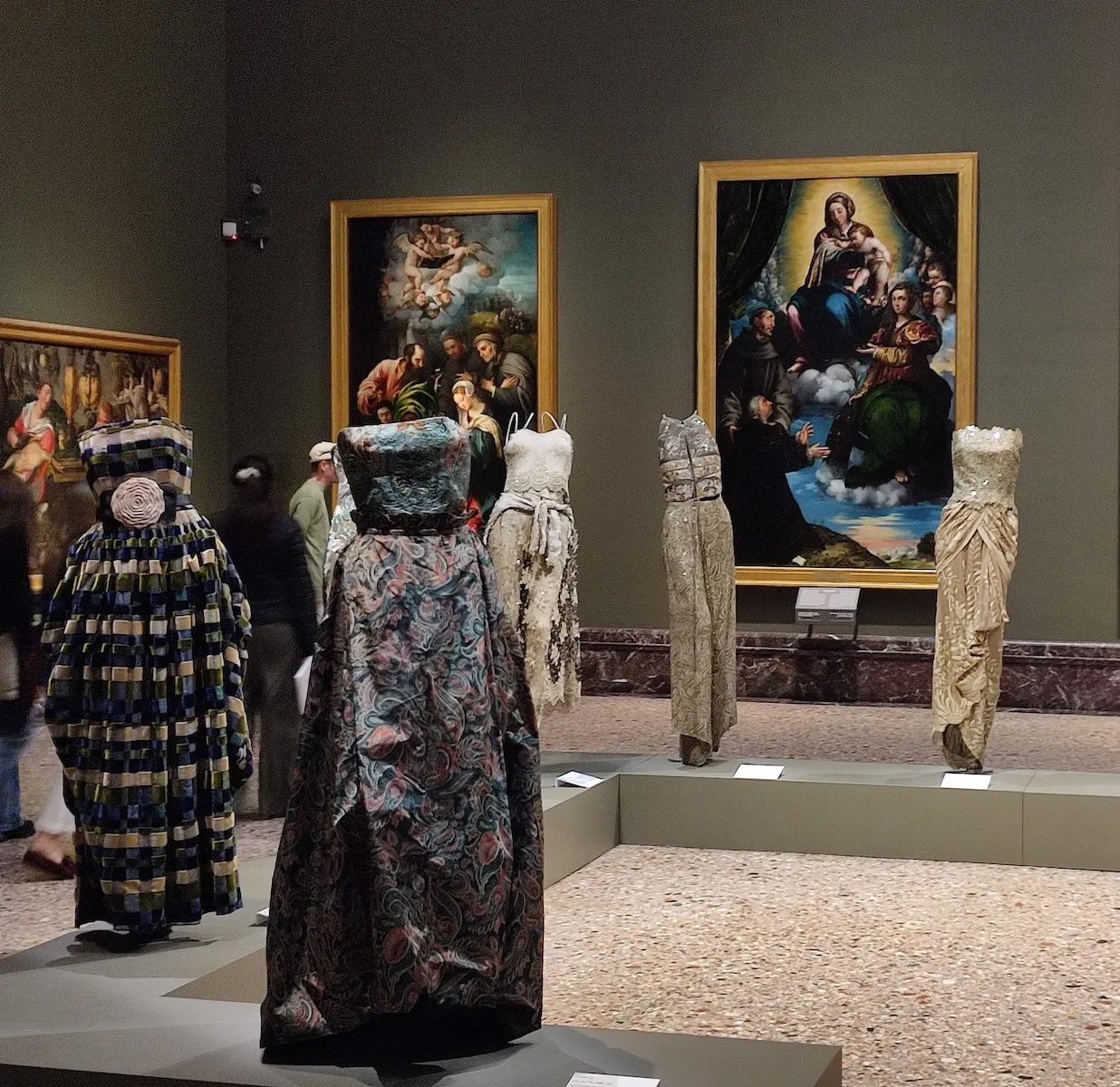
One might think this curatorial choice diminishes the historical importance of the paintings, but in fact, the lack of a direct or obvious correspondence encourages the viewer to find their own connections with the surrounding art. The visitor can discover Armani’s signature greige within the countless grayish shades of saints’ robes.
As one continues through the galleries, it becomes clear how the most humble monastic garment—simple and austere—shares a conceptual kinship with Armani’s deconstructed gray suits. This subtlety is precisely what the Louvre exhibition lacked. There, the logic of resemblance and its insistence on direct, sometimes artificial parallels constrained the viewer to a predetermined reading, leaving little space for personal interpretation or reflection.
Fashion and Art.
In his autobiography, Armani outlined his vision of what an exhibition should be:
“An exhibition can be seen in two ways. On one hand, there’s the immediate satisfaction of the creator’s ego. On the other, there’s the educational value—the unique testimony you can offer to the public, and especially to young creatives, through your work: a feeling that endures and truly fulfills. That’s the aspect that interests me.”
No place in Milan could have embodied this philosophy better than the Pinacoteca di Brera, built in the nineteenth century to allow students of the nearby Academy of Fine Arts to study the masters of the past. With this exhibition, that dialogue expands: fashion, design, and art students can now confront both the greats of history and those of today, in a subtle, evolving conversation, and to build their own visual and conceptual connections.
The exhibition will remain open until January 11, 2026.